How the Gary Burnstein Community Health Clinic is reshaping access to care through compassion and data-driven results
The Gary Burnstein Community Health Clinic (GBCHC) stands as a legacy of hope and a testament to the importance of communities coming together to care for one another. The clinic represents a standard of care built on the belief of its founder, Dr. Gary Burnstein, that everyone deserves access to quality healthcare, regardless of their ability to pay. In Pontiac and across Metro Detroit, that belief has grown into a movement — one that is transforming lives and strengthening communities. And, it’s a model for care that could change the world.
“Dr. Burnstein believed that people don’t just need a quick fix — they need an opportunity to be well and stay well,” said Mary Lewis, CEO of the Gary Burnstein Community Health Clinic. “That idea has guided the clinic since it opened its doors in 2002.”
In 1995, Dr. Burnstein received a letter asking for help caring for people experiencing homelessness in Pontiac. A respected cardiologist at the time, he answered the call and began seeing patients at a homeless shelter in Pontiac, MI.
What began in a broom closet — with one Gary Burnstein Community Health Clinic doctor, a stethoscope, and a commitment to serve — evolved into a full-fledged clinic that has since provided more than $100 million in free services to the uninsured population in Michigan.
After his passing, Dr. Burnstein’s family and friends ensured his legacy lived on by formally establishing GBCHC.The Gary Burnstein Community Clinic was officially founded in 2002. In 2013, the Peterson family donated the historic Detroit Ball Bearing building in Pontiac, and by 2015, the clinic had been transformed into a 7,700-square-foot, state-of-the-art facility.
Now celebrating more than 20 years of service, GBCHC remains Michigan’s largest free clinic, offering comprehensive medical, dental, vision, and pharmacy services — all 100% free to uninsured Michigan residents This free clinic care model allows for comprehensive and preventative care without barriers, decreasing emergency department visits, hospital admissions, and the overall cost of healthcare.
“Free care doesn’t mean less care,” says Dr. Ray Weitzman, a volunteer rheumatologist and 2025 Crain’s Health Hero recipient. “It means exceptional care. We provide the same level of service you’d expect from any top medical practice — because our patients deserve nothing less.”
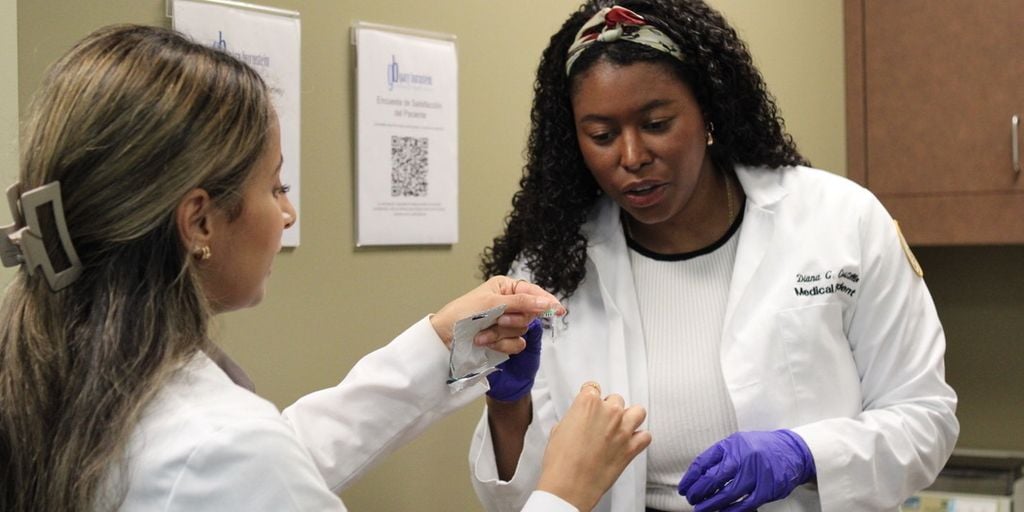
The clinic’s impact is immense. With just nine employees and 700 volunteers, GBCHC serves an average of 325 patients a month and more than 9,000 unique visits annually. Its all-in-one model includes 10 medical specialties, from cardiology to rheumatology, along with a pharmacy, dental suite, vision clinic with free eyeglasses, and an on-site lab. Ninety percent of medications are donated through pharmaceutical partners and programs like Dispensary of Hope, allowing patients to receive complete care at no cost.
The need for such a model has only intensified. More than 430,000 Michigan residents are currently uninsured. Recent projections suggest another 700,000 may lose coverage within the next year.
“The emergency room can’t be the answer,” Lewis says. “People use the ER for primary care because they have no other option. We’re here to change that — to provide consistent, preventative, and compassionate care that keeps people healthy.”
GBCHC’s approach is both data-driven and deeply personal. In 2022, diabetes was the most common condition treated. By 2025, the majority of patients were visiting for annual wellness exams — a powerful indicator that prevention and education are working.
Among the many success stories is one patient who arrived facing an amputation due to uncontrolled diabetes. Within eight days of care at the clinic, his blood sugar stabilized. Weeks later, his infection healed, and two months after that, he was walking again with a prosthetic leg and planning his return to work.
“That’s the impact of this place,” Lewis says. “We don’t just heal bodies — we help people rebuild their lives. This model of care is changing entire communities and has the potential to change healthcare for all of us.”
The clinic’s operations are funded entirely through private donations and grants — no federal funding. Sixty percent of its support comes from Michigan-based foundations, and forty percent from individual donors and philanthropic partners. Every dollar helps sustain a volunteer-driven model that has proven what’s possible when care, compassion and community align.
“The free clinic model can change the global healthcare crisis,” Dr. Weitzman says. “Access to care makes everyone better — patients, providers, and communities. It’s not charity. It’s humanity.”
What began in a broom closet in 2002 is now a cornerstone of hope in Pontiac — a model for how healthcare can and should look when built on compassion, dignity and equity. The Gary Burnstein Community Health Clinic continues to prove that when communities unite to care for one another, everyone thrives.
Read it on > Crain’s Detroit